Nutrition Basics
Protein: How Much Do You Really Need?
There is no single protein number that is right for everyone.
Why Protein Matters
Protein is one of the most important nutrients for maintaining muscle, recovering from exercise, supporting healthy aging, and helping the body stay strong during periods of weight loss.
As we get older, preserving muscle becomes increasingly important.
That does not mean everyone needs an extreme high-protein diet.
It means protein deserves more attention than simply asking whether you are getting the minimum amount needed to avoid deficiency.
The goal should be to eat enough protein to support the life you are actually living.
That may include:
- strength training
- weight management
- recovery from exercise
- preserving muscle while losing body fat
- maintaining strength and mobility as you age
The Minimum Is Not Always the Goal
The traditional Recommended Dietary Allowance for protein is approximately 0.8 grams per kilogram of body weight per day.
That amount is designed primarily to prevent deficiency in most healthy adults.
It should not automatically be interpreted as the ideal intake for every person.
Adults who are physically active, strength training, trying to build or preserve muscle, or losing weight may benefit from a higher intake.
For many active adults, a practical range is often around 1.2 to 1.6 grams of protein per kilogram of body weight per day.
Some individuals may benefit from somewhat more depending on their training level, body composition goals, total calorie intake, age, and overall health.
There is no single perfect number for everyone.
Protein and Healthy Aging
As we age, the body may become somewhat less responsive to smaller amounts of protein.
This is one reason protein intake and resistance training work so well together.
Strength training gives the body a reason to preserve and build muscle.
Protein provides the amino acids needed to support that process.
Neither one replaces the other.
For adults focused on healthy aging, the goal is not simply to weigh less.
The goal is to maintain as much strength, muscle, mobility, and physical capability as possible.
Protein During Weight Loss
When calories are reduced, the body can lose both fat and lean tissue.
That is why protein becomes especially important during weight loss.
Adequate protein, combined with resistance training, can help reduce the amount of muscle lost while body weight comes down.
This becomes particularly important for people who are losing weight rapidly or who have a significant amount of weight to lose.
The goal should not simply be:
“Lose weight.”
A better goal is:
“Lose body fat while protecting as much muscle and strength as possible.”
How Much Protein Should You Eat at One Time?
You do not need to consume all of your protein in one or two meals.
For many people, spreading protein across the day is more practical and may support muscle protein synthesis more consistently.
A useful approach is to include a meaningful source of protein at each meal.
For many adults, that may mean approximately 25 to 40 grams of protein per meal, depending on body size, total daily needs, activity level, and the number of meals eaten each day.
Larger individuals or people with higher protein targets may need more.
The exact number is less important than consistently reaching an appropriate total intake across the day.
Quality Matters Too
Protein can come from both animal and plant sources.
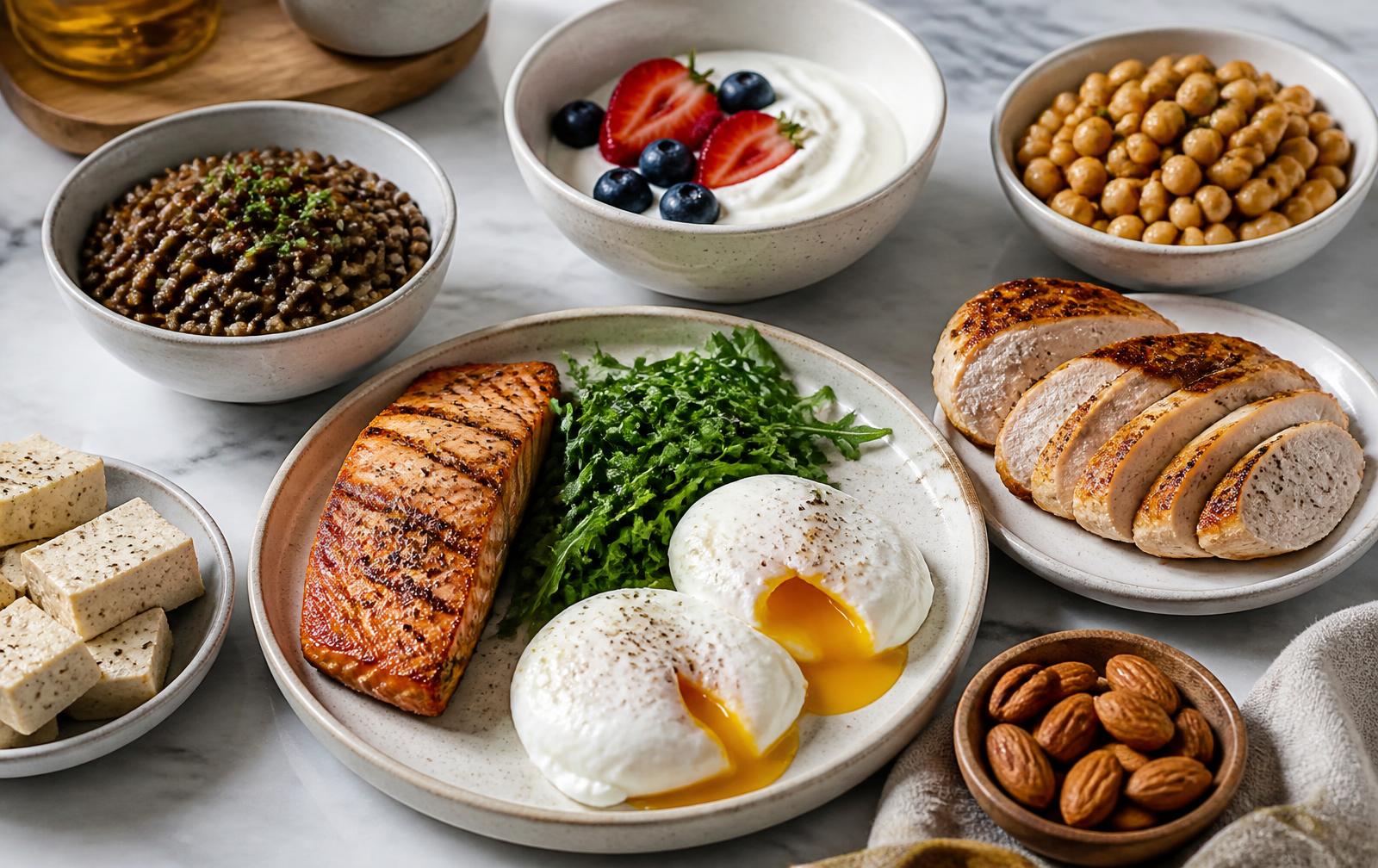
Common options include:
- eggs
- poultry
- fish and seafood
- Greek yogurt and cottage cheese
- milk and dairy products
- whey or casein protein
- soy foods
- beans and lentils
- peas
- tofu and tempeh
Different protein sources contain different amounts and combinations of essential amino acids.
You do not need to obsess over individual amino acids at every meal.
A varied diet with sufficient total protein generally makes this much easier.
Do You Need Protein Powder?
No.
Protein powder is a convenience, not a requirement.
If you can meet your protein needs comfortably through food, that is perfectly fine.
Protein powders can simply make it easier to reach a daily target when appetite, schedule, or convenience becomes an issue.
They can be especially useful:
- after training
- during busy workdays
- when a full meal is not practical
- when someone struggles to eat enough protein from food alone
Think of protein powder as food in a convenient form, not as something magical.
More Protein Is Not Automatically Better
There is a point where simply adding more protein does not necessarily produce additional benefit.
Protein should still fit within a balanced diet that includes vegetables, fruit, whole-food carbohydrates, healthy fats, fiber, and adequate hydration.
More is not always better. Appropriate is better.
People with kidney disease or other medical conditions that may affect protein intake should discuss their individual needs with a qualified healthcare professional.
What You Should Actually Do
Start by looking at your current diet rather than immediately chasing a perfect number.
Ask yourself:
- Do I include a meaningful protein source at each meal?
- Am I strength training?
- Am I trying to lose weight?
- Am I recovering well from exercise?
- Am I maintaining my strength?
- Am I getting enough total calories and nutrients overall?
If you are an active adult, a reasonable place to begin is often around 1.2 to 1.6 grams of protein per kilogram of body weight per day.
Then adjust based on your goals, body size, training, appetite, and medical needs.
Spread that protein across your meals rather than trying to consume most of it at one time.
Choose mostly high-quality whole-food protein sources.
Use protein supplements only when they make your diet easier and more practical.
And remember:
Protein supports muscle. Strength training gives your body a reason to keep it. The two belong together.
Vince’s Take
“Protein is something I pay attention to every single day, but I don’t believe nutrition should become a math exercise that takes over your life.
For me, the bigger lesson is understanding why protein matters.
If I’m putting the work into strength training, I want to give my body what it needs to recover and preserve the muscle I’m working so hard to maintain. And as we get older, I believe that becomes even more important.
I also believe food should come first whenever possible. A shake can be incredibly convenient, and I use protein supplements myself, but they supplement real nutrition. They don’t replace it.
Don’t chase somebody else’s protein number because you saw it on social media. Learn what makes sense for your body, your training, and your goals, and then be consistent with it.”
— Vince Angelo
ISSA Certified Personal Trainer
ISSA Certified Nutritionist
Educational Notice
This article is for educational purposes only and is not medical or individualized nutrition advice. People with medical conditions or specific dietary restrictions should consult an appropriate healthcare professional before making significant changes to protein intake.